Argentina seems to be moving away from a decades-long opposition to mining and other activities perceived as harmful to the environment, in favor of an approach that places greater emphasis on urgently needed economic development and growth.
Three key legislative proposals that have dominated the public debate in the last few weeks signal this notable shift in attitudes.
On Monday, President Javier Milei filed a bill that modifies a law that protects glaciers, with the goal of loosening barriers on mining.
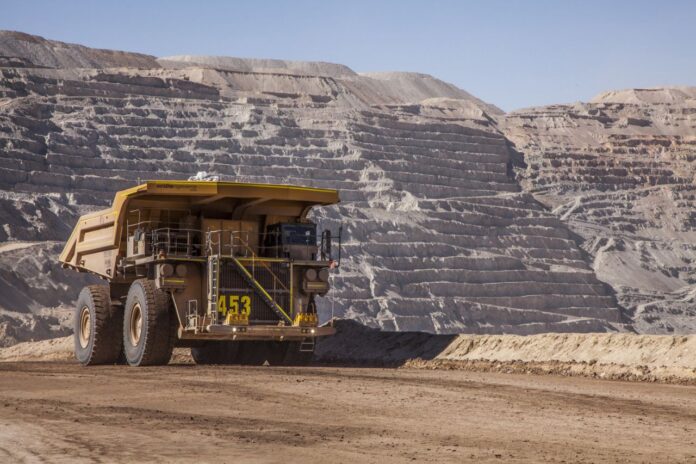
Last week, the provincial Congress of Mendoza green-lighted what will become the first copper mining project in the province in two decades — which environmental activists say could potentially contaminate the water in the Uspallata area.
And, this week, Tierra del Fuego also approved a bill allowing salmon farming, which had been banned in the province since 2021 after demands from environmentalist organizations, who warn that the fishes’ excrements, along with antibiotics and other substances used to keep them healthy, damage the ecosystem, and that introducing an exotic species to Argentina’s southernmost waters could put native species in danger.
The conversation surrounding these proposals moves between extremes: some say that allowing such activities will lead to contamination of the environment and pollution of water sources. Others state that mining is an important industry that Argentina needs to develop, as it is rich in mineral resources.
This is the view held by the government. “The new Argentina will grow thanks to the three pillars of the economy: farming, energy and mining,” said Milei recently, backing the copper mining project in Mendoza.
There are also those who believe that, while developing those industries will benefit Argentina economically, national and local governments must ensure that the environment is correctly protected.
According to a report by marketing consultant agency LLYC, the pro-mining sector seems to have gained traction on social media since Milei became president and is dominating the conversation.
Meanwhile, environmental activists in Mendoza have consistently organized marches opposing the copper mining project. Many of them ended with violent police crackdowns and protesters arrested.
The bill to modify the law protecting glaciers has also stirred rejection from opposition parties like Peronism and left-wing sectors. During a march organized by unions against a labor reform bill in Buenos Aires, protesters held a banner that stated: “There won’t be jobs without water,” in opposition to both the glaciers bill and the Mendoza project.
More protests are expected in Buenos Aires when the glaciers bill is debated in Congress over the summer.
Argentina has a historical chance of becoming a key actor at a world-wide level in mining, but is there enough consensus for this?
A growing industry Argentina is rich in many natural resources, including minerals and metals like copper and lithium. The world is leaning towards an energetic transition, in which copper is key.
The Milei government has made foreign investment in industries like mining especially attractive by creating a new large investments’ regime, known as the RIGI, which offers tax breaks, currency exchange benefits and other legal and customs perks to those who invest over US$200 million in local projects.
Mining currently only represents 4% of the country’s exports, but the earnings are growing, going from US$4.6 billion in 2024 to an estimate of over US$5 billion in 2025, according to the Argentine Chamber of Mining Companies and the Rosario Stock exchange.
If those numbers are confirmed, they would break historic records for the sector, marking a 14% interannual increase and the fifth consecutive year of growth.
Expansion of the activity, however, has been fiercely fought against by environmentalist groups, which in the past years gained strength, in line with the movement in other parts of the world.
Turning of the tide According to Elisabeth Möhle, an environmental researcher at public policies research center Fundar, “there was a big environmentalist wave” around the world between 2015 and 2020, but it generated a backlash as United States President Donald Trump painted the cause as “communist or woke.” This created an international climate of rejection.
“The Argentine government seems to be going in that direction, with politicians saying: ‘let’s just focus on productive development and not worry about the environment,’” she told the Herald.
According to Möhle, concerns about mining projects fell under the public debate radar in the last few years, but now the conversation has resurfaced, in a different light: the focus is on supporting mining activities.
“There was a change in citizenship perception about this, after witnessing many years without economic growth.”
The LLYC report released last August on public discussion about mining states that, since Milei took office in December 2023, and until February 2025, there have been more social media users speaking positively about the topic and more posts about it, mostly by supporters of the activity and of the national government.
Negative comments about mining have also dropped, they said.
“This signals a larger acceptance of the industry and a more consolidated social support,” the report stated.
However, lawyers focused on environmental protection contest this idea, and say that the positive turn towards mining is only attributable to the government, not society as a whole.
“I don’t think there has been a change in the public’s opinion about this. Instead, we now have a government that is a denialist of climate issues,” said Enrique Viale, head of the Argentine Association of Environmentalist Lawyers, in conversation with the Herald.
Viale says there is a “never-before-seen” widespread alignment with the government in news media outlets, which “makes it look like there is a consensus to move forward with these projects.”
This, he said, has created a snowball effect, leading to the presentation and approval of bills that allow mining projects and salmon farming.
“But people are resisting. There are marches all the time in Mendoza. I don’t think there is social consensus for this,” Viale said.
He also warned that the government wants to pass the bill modifying the glaciers’ protection law “without allowing a public debate.” On Thursday, Viale spoke before the Senate’s environment commission, at a meeting in which experts and members of mining and environmental organizations gave their opinion on the bill.
The debate in the Senate is scheduled for February.
Milei and climate change Even before being elected president, Milei has stated he does not believe climate change is real. After taking office, he demoted the Environment Ministry, turning it into an undersecretariat.
Argentina has also taken a U-turn in its stance on environmental and climate change issues in international forums.
In 2024, Milei withdrew the Argentine delegation from the United Nations Climate Change Conference (COP29), and he has publicly rejected the UN’s 2030 Agenda for Sustainable Development, which includes measures to protect the environment.
“It’s not like we were in an environmental heaven before, we have been critical of previous governments. But now, they have crossed all lines,” Viale said. “Milei openly attacks the environmentalist movement, it’s one of his main enemies.”
Cristian Fernández, a lawyer coordinating the legal area of the Environment and Natural Resources Foundation (FARN, by its Spanish acronym) said that bills allowing mining and extraction of other natural resources have been on the increase since 2022.
Fernández thinks the debate about mining is gaining traction in public conversation because of efforts from the government to promote that industry. According to him, the authorities are pushing a “false dilemma” that pits economic progress against protection of the environment to divide the public.
“In Argentina, we are used to governments creating ruptures so that society becomes polarized. The president has a strategy of insulting those who think differently from him.”
However, this has led the environmentalist movement to unite in its rejection of Milei’s bill to modify the law protecting glaciers.
“The movement will stick together, and it won’t be so easy for the government to pass this reform. And, if it is approved, we will take it to court,” Fernández said.