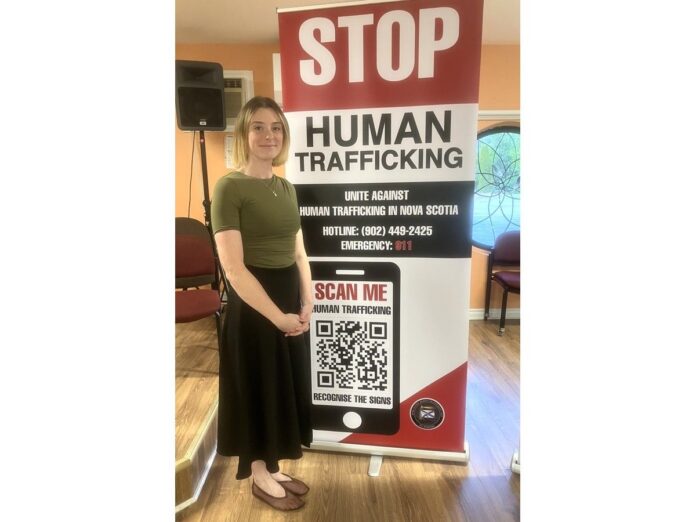
‘Human trafficking is often misunderstood as something that happens somewhere else’Published Jul 29, 2026Last updated 5hours ago9 minute readThe issue of human trafficking is being spotlighted globally July 30 which is the designated World Day Against Trafficking of Persons. Kaela Ramsay, a public service employee with the RCMP and its provincial human trafficking unit spent some time in Cape Breton recently travelling around leading public workshops about the issue. Nova Scotia has the highest rate of human trafficking investigations in the country. Photo by ROSEMARY GODIN /CAPE BRETON POSTArticle contentHuman trafficking in Cape Bretonisn’tlike what you see on television or in the movies.It’snot a truckload of girls being carted away in the back of a truck.THIS CONTENT IS RESERVED FOR SUBSCRIBERS ONLY.Subscribe now to access this story and more:Unlimited access to the website and appExclusive access to premium content, newsletters and podcastsFull access to the e-Edition app, an electronic replica of the print edition that you can share, download and comment onEnjoy insights and behind-the-scenes analysis from our award-winning journalistsSupport local journalists and the next generation of journalistsSUBSCRIBE TO UNLOCK MORE ARTICLES.Subscribe or sign in to your account to continue your reading experience.Unlimited access to the website and appExclusive access to premium content, newsletters and podcastsFull access to the e-Edition app, an electronic replica of the print edition that you can share, download and comment onEnjoy insights and behind-the-scenes analysis from our award-winning journalistsSupport local journalists and the next generation of journalistsRegister to unlock more articles.Create an account or sign in to continue your reading experience.Access additional stories every monthShare your thoughts and join the conversation in our commenting communityGet email updates from your favourite authorsSign In or Create an AccountorArticle contentArticle contentIt happens right herein ourneighbourhoods. Andthese days,it can begin right in people’shomes.Article contentArticle contentWhen you find out that one “commodity” of another person’sbody can bring someoneelse$200,000 over acouple ofyearsor less, youunderstand the danger people can find themselves in.Article contentJuly 30 is World Day Against Trafficking of Persons. The 2026 theme, Trapped Behind the Scam, draws attention to a rapidly expanding form of human trafficking in which trans-national organized crime groups exploit people sexually and through labour wrongs and carry out industrial-scale financial fraud.Article content“Human trafficking is often misunderstood as something that happens somewhere else,” said Jennifer MacLellan, director of case management with the Elizabeth Fry Society of Cape Breton. “Film and television have portrayed it as organized crime in large cities or foreign countries. In reality, human trafficking also happens in communities across Nova Scotia including rural communities like Cape Breton, and it often looks very different than people expect.Article contentArticle content“In many cases, those being traffickeddon’trecognize that they are victims because the exploitation develops gradually through manipulation, coercion, and control rather than abduction or physical restraint. According to the RCMP’s Nova Scotia Human Trafficking Unit(NSHTU), victims often do not recognize they have been recruited into a dangerous situation.”Article content The Elizabeth Fry Society of Cape Breton is encouraging everyone to become educated about the signs of human trafficking. Jennifer MacLellan,director of case management with the society, says the issue definitely exists in Cape Breton and her organizationworks with women and gender diverse people who have experienced significant trauma, including coercive control, sexual exploitation, and violence – all parts of human trafficking. CONTRIBUTEDArticle contentArticle contentMOST INCIDENTS IN CANADAArticle contentAccording to Kaela Ramsay, a civilian working with the provincial human trafficking unit in Nova Scotia where the rate of human trafficking incidents is the highest in Canada, it mostly involves sexual or labour exploitation in this area.Article contentA definition ofhuman traffickingis that itinvolves the recruitment, transportation or harboring of persons for the purpose of exploitation.Article contentRamsaysays itoccursindifferentways.Most commonlyit’ssex trafficking – this would belikeapimp-prostitute relationship.Article contentShetravels around the province giving workshops to organizations and the public about human trafficking.She says it is an issue thatcan toucheveryoneandanyone,yetislargely outof the public eye.Article contentOne of the aspects of it that fewpeopleknow isfamilial trafficking.Article content“That’s a family member trafficking a child or another family member in their home. It could befor money, could befordrugs,could be cigarettes,orit could beforsupper that night,” Ramsay says. “That’sseverelyunderreported andsuper difficult to detect because it happens in the home.”Article contentShe explainsthattraffickingthrives in isolation.Article content“The internet and social media are about 98 per cent where we see it (starting). So many people are being recruited through the internet, and this can be done through such things as Instagram, Roblox, Snapchat,” she says.Article contentRamsay says shecan’tstressenough aboutthe importance ofmonitoringyour child’s internet usage.Article content“Monitor their devices and just keep those conversations open and non-judgmentalin the home,” is her best advice.Article contentVICTIMS OF ALL AGESArticle contentRamsay says the RCMP have investigated cases of women of all ages – youth to senior – where their partners are their traffickers.Article contentArticle content“And there’s a heightened risk for youth. This would be chalked up to just general behavior that teenagers have when they’re looking for acceptance. That can often be a point of vulnerability for youth,” she says.Article content“There’s also an increased risk for Indigenous women and girls. Systemic factors such as poverty, trauma, lack of support, increased vulnerability to trafficking and violence against indigenous women, girls and two-spirited” make them more vulnerable.Article contentThe facts back her up. Indigenous girls make up about four per cent of the population in Canada, but they represent 26 per cent of all victims who experience violence.Article content“Andsomething that we’ve seen here in Nova Scotiaandactually across Canada is a huge riseinlabourtrafficking. This is especially damaging for a new Canadian withoutanunderstanding of whatlabourstandards look like here in this country,”Ramsaysays. “This could belong hours of work,little orno pay, substandard living conditions – things like that.”Article contentArticle contentShe says in Nova Scotia,human traffickingcan be found inthehospitality industry, agricultureorfisheries most predominantly –basically theprovince’s main industries.Article content One of the main reasons people stay when they’re being trafficked is the threat of blackmail and the shame they feel. But groups and organizations working to support and heal victims are hoping more compassion and understanding can be shown to people who want to leave that life behind. Nova Scotia has some of the highest rates of sex trafficking in the country and advocates say it is still under reported. CONTRIBUTEDArticle content‘SECURITY FOR SEX’Article contentRamsay says sex trafficking is very high in Cape Breton as far as human trafficking goes. She refers to it as a “security for sex” problem and says there are times women and youth are willing to put up with some touching or more if it gives them a bed for the night.Article contentData from Statistics Canada shows that Nova Scotia has the highest rates of police-reported human trafficking in Canada. In 2022, Nova Scotia reported 4.5 incidents per 100,000population. The national average is 1.4 per 100,000. The only other province that is above the national average is Ontario.Article contentArticle content“The sad part is it’s not even accurate,” Holleman said. “It’sonly the numbers that have been reported. Girlsaren’tcoming forward becausethere’sno protection for them;there’sno accountability for the perpetrators. Why are they going to come forward and put themselves even more at risk ifthey’vedecided that they want to get out of that life?”Article contentShame of being judged and fear of violence or blackmail by the traffickerkeeppeople from leaving the trade.And those who eventually do leave oftenlive inhiding for years.Article contentRamsay stresses that people wanting to leave their abuser or trafficker should not fear the police. She says the provincial human trafficking unit and the Halifax Police vice unit are trained and dedicated to help and support people in leaving. As well, she says local police forces all through the province are training staff and should know what to do when a person comes forward.Article contentEven if the person does not want to press charges, there are peoplein lawenforcement whocan helpvictims becomere-establishedincommunity, she says.Article contentArticle contentFollowing an arrest in East Hants in April resulting in several human trafficking and related financial crimes, Sgt. Jeff MacFarlane of the province’s human trafficking unit said: “Investigators’ main priority in any human trafficking investigation is the safety of the victims.”Article contentThe arrest was attended by the unit as well as the Nova Scotia organized crime section and East Hants District RCMP.Article contentHe said asofficers begin working with the victims, they connect them withappropriate resourcesin addition to putting together evidence to support criminal charges.Article content“Reducing the harm caused by human trafficking remains a priority for police and communities across Nova Scotia,” says Sgt. MacFarlane. “Addressing this issue requires a united effort, and we recognize the strength and courage of the victims who came forward to support this investigation. Their cooperation helped dismantle a sex trafficking network and protect others from being victimized.”Article contentArticle contentDuring the investigation leading up to the arrest, financial analysts with the Forensic Accounting Management Group identified over half-a-million dollars in suspected proceeds of crime funneled through casino activities across three provinces.Article contentAt her workshops, Ramsay tells people that there is nostatute of limitations for human trafficking.Article content“Soif you are oldernow andyears have passed andyou’rethinkinginhindsight‘I was definitely being trafficked during that time’you canstill come forward and report it.Article contentHOW DOES IT HAPPENArticle contentThere are a variety of“Pathways to Entry”that youth or others may take to end up in the sex trade. Most commonly,people become involved through othersthey knowand have a relationship with.Article contentAccording to Ramsay, traffickers use a methodical strategy of luring, grooming, and recruiting vulnerable people under the guise of either a romantic relationship, friendship or replacement of the parental role to coerce them into participating in the sex trade. Article content“People might see someone they have six mutual friends with online and think ‘well, I know all these six so this person getting in touch with me must be a real person,” and a relationship begins.Article contentOnline recruitment canalso come throughmisleading advertisements such assponsored modeling opportunities.Landing a jobthat’stoo good to be truewith promises tofly youfree somewhere for work is common, says Ramsay.Article contentAnd she says the victim of trafficking often begins to have a boyfriend relationship (most traffickers aremale) and thinkthey’rein love so want to be loyal to them. They believethey’rein aconsensualrelationship and when asked to do somethingto help him out or pay for things, a woman will comply even when not wanting to do it.Article contentOther times, a woman might move beyond her usual boundaries for someone if they have been showered with gifts – and then told she should repay the trafficker. Before a person knows it, they are feeling deeply in debt – financially or emotionally. They stay and continue out of shame and fear of violence or blackmail. Often, they stay out of a misdirected sense of love and loyalty.Article contentArticle content“Human trafficking rarely begins with violence,” said MacLellan.“More often, it begins with grooming.”Article contentMacLellan and Ramsay both note that warning signs can include a new relationship where someone is treated “like a prince or princess,” receives expensive gifts for no apparent reason, or is showered with affection and attention.Article contentOver timetheysay,that affection can turn into control.Article content“A trafficker may begin isolating someone from family and friends, controlling their finances, monitoring their movements, taking control of identification or money, or demanding constant check-ins by phone or text,” said MacLellan. “What initially feels like love and protection can gradually become intimidation, fear, and exploitation.”Article contentMANIPULATION TO EXPLOIT VICTIMSArticle contentTraffickerssearchout vulnerable people and know how to exploit their needs.Article content“Humans naturally craveconnection, particularly those who have experienced trauma and are searching for safety, belonging, or relief from emotional pain. Traffickers understand these vulnerabilities and deliberately target them,” MacLellan says.“They are skilled atidentifyingunmet needs and using manipulation, deception, intimidation, emotional dependency, financial control, and violence tomaintainpower over another person.”Article contentArticle contentEventually, she says, traffickers often rely on force, fraud, coercion, and manipulation to exploit victims for their own gain.Article contentAnd MacLellan says that many of the women who become involved in the criminal justice system have first been victims themselves. Their criminalization is often rooted in abuse, manipulation, addiction, survival, and systemic barriers rather than choice alone.Article content“One of the most important things our community can do is replace judgment with understanding. Rather than asking, ‘Why didn’t they leave?’ We should be asking, ‘What barriers prevented them from leaving safely?’ Fear, trauma, financial dependence, threats to loved ones, addiction, shame, and a lack of safe housing can all make leaving incredibly difficult,” MacLellan said. “Supporting survivors means believing them, reducing stigma, and ensuring they have access to safe housing, trauma-informed care, addiction treatment, and the resources they need to rebuild their lives.”Article contentAs they mark World Day Against Trafficking in Persons this week, the Elizabeth Fry Society encourages everyone in Cape Breton to learn the warning signs of human trafficking and to trust their instincts if something doesn’t seem right.Article contentThe trafficking and exploitation services system urges people to report concerns even if they are not certain that trafficking is occurring. Article contentThe Nova Scotia Human Trafficking Hotline is 902-449-2425.If someone is in immediate danger, call 911.Article contentWith files from Ian Fairclough, Annapolis Valley RegisterArticle contentRosemary Godin is the Local Journalism Initiative Reporter for the Cape Breton Post, a position funded by the federal government.Article content
Human trafficking in Cape Breton: ‘It often looks very different than people expect’