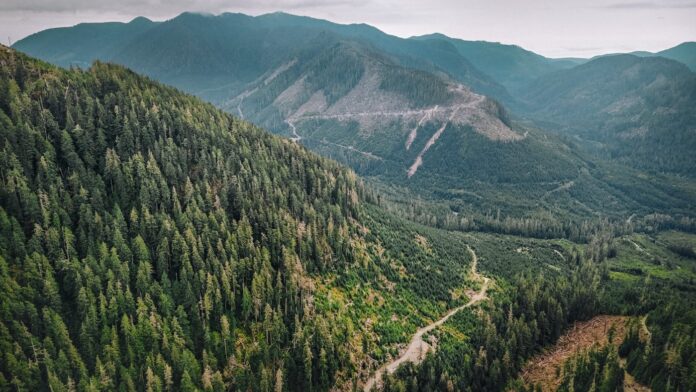
Peter Cressey has been visiting the Carmanah and Walbran valleys for decades. Nestled between the Pacific Ocean and the sprawling spider-web of cutblocks and logging roads that mark the island’s interior, these two valleys form one of southern Vancouver Island’s largest remaining intact old-growth ecosystems. They’re home to centuries-old spruce trees, gnarled cedars and plants and animals that live in few other places. “It’s not just the trees,” Cressey, who volunteers with Friends of Carmanah Walbran, says. “There’s a whole bunch of threatened species, the marbled murrelet, the screech owl, the specklebelly lichen and the dromedary jumping slug. There’s a whole list of very unique species that are facing some serious threats.”In the early 1990s, Cressey was arrested at a logging blockade in the region, part of a campaign that convinced the province to expand what was then called Carmanah Pacific Provincial Park to include parts of the Walbran in 1995.Today, the park is known as Carmanah Walbran. BC Parks describes it as “aluxuriously forested sanctuarythat is without a doubt one of the most remarkable wild places on Vancouver Island.” But right now, they also say it’s “inaccessible by vehicle” and that “the day-use areas, campground, and trails are currently unmaintained.” That’s because it’s blocked by landslides on one side and locked metal gates on the other. BC Parks didn’t provide a timeline for restoring park access. Instead, they directed questions to Tsawak-qin Forestry, the company responsible for both the metal gates and, they say, for clearing the landslides. In 2025, a blockade was staged in the Walbran valley to protest logging of old-growth forest. Photos: Mike Graeme / The Narwhal In an emailed statement, Tsawak-qin told The Narwhal that they are “working with government and others to open access to the western, public access point of the park,” but didn’t offer a timeline. They promised to “provide more information when it becomes available.” Carmanah Walbran is one of many outdoor recreation areas in B.C. accessed by resource roads. Cressey and others say its ongoing closure raises questions about public access to public lands, and the province’s management of thousands of kilometres of resource roads that connect British Columbians to some of the province’s most spectacular back country regions. Ministry approves gates to close park to recreational users, citing ‘safety concerns’ When Cressey talks about the logging protests of the 1990s, a period sometimes called the War in the Woods when activists and First Nations fought old-growth logging in Clayoquot Sound and up into the Carmanah Walbran region, there’s a hint of pride in his voice. But he’s also learned a lot since then, and though his passion for protecting old-growth forests remains, his tactics have changed. Today, Cressey’s with the Friends of Carmanah Walbran, which is focused on protecting ancient forests through education and community building. Much of their work centres on the central Walbran Valley, a stand of old-growth forest just outside the southeastern edge of Carmanah Walbran Park. On a map, it looks like someone took an ice cream scoop to the park boundary. Torrance Coste, associate director of the Wilderness Committee, calls it “the bite.” That bite is not part of the park itself. According to Coste, activists remember it was left out at the request of logging companies. But decades of activism have kept the saws at bay, and the area is currently covered by a provincial old-growth deferral. Within it lies a network of trails and campsites built and maintained by Cressey and the Friends of Carmanah Walbran. Some of these trails, like the Anderson Lake and Marble Canyon trails, cross into the provincial park, while others sit outside the boundary entirely. All of them are maintained by volunteers. For years, Friends of Carmanah Walbran have used trail maintenance trips and educational gatherings to bring people into the region to advocate for protecting the old-growth forests that still lie outside the park boundary. But this spring, something changed. In March, Cressey learned that the province approved Tsawak-qin Forestry’s request to put locked gates on roads east of Carmanah Walbran Park. These gates blocked access to both the bite and the trails from it that cross into the park. Cressey reached out to Tsawak-qin to request permission to pass through the gates for a birding event in early July.Initially, he says, the company seemed open to letting the birders through. He even offered to give them the names of everyone participating — a group of birders, artists and scientists. But eventually, Tsawak-qin told him they couldn’t allow the group through the gates. Cressey says they told him it was due to “public and worker safety issues.”Tsawak-qin didn’t directly address questions about the birders, but noted in an emailed statement to The Narwhal that the gates were put in place due to “several incidents [that] have occurred recently in the Walbran area that endangered people and caused damage to property,” citing a burnt bridge deck, damaged bridge cables and blocked drainage structures. In August 2025, a blockade was established in B.C.’s Walbran valley to protest logging of old-growth forest before and lasted months before being removed by injunction. Tsawak-qin Forestry didn’t specifically cite the blockade in its statements to The Narwhal, but said ‘several incidents’ had caused damage to property and endangered people. Photo: Mike Graeme / The Narwhal This “created unsafe road conditions,” Tsawak-qin Forestry said. “In addition, there is evidence of members of the public entering active work sites,” it added, though they did not give specific examples. There was a blockade in the Walbran between August and December 2025, which led to 13 arrests. The company didn’t reference this blockade directly, but Cressey thinks that it, and the continued presence of a nearby protest encampment, contributed to the company wanting to shut down access. On July 16, social media accounts from this camp posted a video of two people locked to one of the Tsawak-qin gates. In the video, one masked figure explained the action as a response to the company cutting off public access to “public land.” British Columbia’s Forest and Range Practices Act allows resource companies to request permission to install and lock gates to prevent public access on back country resource roads. According to the province, these approvals are granted when “use of the road would likely endanger property, public health or public safety.” In the case of the eastern Carmanah Walbran gates, Coste says it’s unclear what the justification is, or what threat a birding event might pose to property or safety. He worries that approvals for these kinds of gates have been increasing since the Fairy Creek blockades where more than 1,100 people were arrested opposing old-growth logging in the Fairy Creek watershed near Port Renfrew in 2020 and 2021. When asked whether this was true, the Ministry of Forests declined to comment, explaining that finding the answer was “a complex ask during the middle of field season when resources for data gathering are limited.” Coste thinks logging companies could be trying to solve that problem by “closing access to vast swaths of the island [and] the province to any and all other user groups.” Tsawak-qin did not comment when asked about any direct connections between logging protests and their request to gate these roads. “If logging companies have a problem with blockaders, that’s a political issue that they should take to the province, not deal with it with gates out on the back roads,” Coste says. “If companies can’t log without fear of people getting in the way of their operations, they have a social licence problem.” Why aren’t public land access groups talking about the Carmanah Walbran? For Cressey, part of the problem is that BC Parks isn’t clear about what qualifies as access points to Carmanah Walbran. The park’s website lists directions to access the park’s western side and the Ministry of Environment and Parks says that “there are no developed BC Parks facilities or designated BC Parks trails within the [eastern] portion of the park.” But the Ministry of Forests recommended park access routes on both the eastern and western sides of the park, adding that the public could still pass the eastern gates on foot. For Cressey, using the western side of the park might have been the easiest solution to his locked gate problem. But the road on that side, called Rosander Main, was also blocked, not by gates, but by landslides that had come down in the fall of 2025. Neither BC Parks nor the Ministry of Forests have plans to clear the landslides. The responsibility for clearing that road, they say, lies with the logging companies that use it. Coste says that’s a problem, calling it “anti-democratic” that a private company can control public access to the park. “It’s a huge concern that access to an iconic provincial park like Carmanah depends on whether or not a private company is logging next to the park.” As short-term closures at Joffre Lakes Park near Pemberton and Botanical Beach, a popular section of Juan de Fuca Park on Vancouver Island, both of which have instated reconnection periods for rights-holding First Nations members, have prompted an outcry, Coste says it’s notable the ongoing access issues at Carmanah Walbran Park haven’t gotten more attention. Since 2023, the popular Pipi7íyekw/Joffre Lakes Park has been temporarily closed for “reconnection periods” to give the busy park a break and permit members of the Líl̓wat and N’Quatqua First Nations to spend time on their traditional territory. These closures have prompted backlash among groups like the Public Land Use Society, though the organization has not commented on the closure of Carmanah Walbran Park. Photo: Paige Taylor White / The Narwhal “[Carmanah Walbran] has been closed for 10 times longer than Joffre Lakes will be closed this year,” Coste says. “And not a peep from the folks that are up in arms about the Joffre closure.” Among the groups concerned about the Joffre Lakes closures is the Public Land Use Society, an organization with close ties to the mining industry that was founded in 2025 to advocate for public land access. Among their first slate of directors was Caroline Elliott. A former BC Conservative leadership candidate, she has been a leading voice in opposing British Columbia’s decision to work with the Líl̓wat and N’Quatqua Nations on annual, short-term closures at Joffre Lakes, calling them an “ancestry-based park closure.” In 2025, the government’s decision to unilaterally shorten the temporary closure of Pipi7íyekw/Joffre Lakes Park for the Líl̓wat and N’Quatqua First Nations’ reconnection period triggered protests along the highway. Photos: Paige Taylor White / The Narwhal When The Narwhal reached out to the Public Land Use Society, its executive director, Warren Mirko, wasn’t aware that Carmanah Walbran Park was closed. “[The Public Land Use Society] has not yet heard from the public regarding this site and was unaware of the access issues,” Mirko wrote in an email. But while he agreed it was a concern, he differentiated it from Joffre Lakes, describing the latter as “a deliberate government-supported closure of a popular provincial park.”For Coste, the lack of attention to the Carmanah Walbran issue “underscores that it’s not really about access to the land and access to provincial protected areas” for groups like Mirko’s, but about opposing the Declaration on the Rights of Indigenous Peoples Act, which was passed with unanimous consent in B.C. in 2019 but has since become a locus of controversy.In his emailed statement, Mirko wrote that the Declaration on the Rights of Indigenous Peoples Act and “other issues surrounding government’s reconciliation initiatives and agreements are central matters in respect of public access and provincial governance over Crown land.” Access to parks is a province-wide problem in B.C. While Mirko and Coste don’t agree on much when it comes to reconciliation and parks, both have concerns about how British Columbia manages resource roads. While Coste is worried about the road leading to Carmanah Walbran, Mirko is focused on an access road to the Incomappleux Valley near Revelstoke in the B.C. Interior. In June, his organization joined the Quad Riders Association of British Columbia in questioning the province’s decision to decommission t he Incomappleux Forest Service Road. Access to parts of the Incomappleux Valley, near Revelstoke, B.C., also relies on resource roads. The provincial government’s plans to decommission a forest service road rely on the same rationale used to put gates on the road into Carmanah Walbran Park. Photo: Paul Zizka / Nature Conservancy of Canada According to the province, the deactivation is due to road damage and plans to establish a conservancy, a type of park in which human access and natural resource development is limited to preserve ecological, recreational or cultural values, in the upper valley. But Mirko and the Quad Riders argue this closure would unfairly cut off property and trail access, questioning the province’s “authority to proceed” in a press release.The province outlined its authority in a document released in April 2025, citing the Forest and Range Practices Act — the same rationale used to approve the gates east of Carmanah Walbran Park. Issues with resource roads are nothing new for Louise Pedersen, executive director of the Outdoor Recreation Council of British Columbia. “Outdoor recreation in British Columbia has co-evolved with forestry and other types of resource extraction,” Pedersen says. “So a lot of our access uses resource roads.” But those roads, Pedersen explains, aren’t managed for recreation. When the logging or mining operations pull out, they decommission the roads and leave them unmaintained, often cutting off access to recreation areas in Crown lands. And with an estimated more than 600,000 kilometres of resource roads criss-crossing the province, it’s a big deal — one that Pedersen says is getting worse. “In the last decades, things really have been accelerating,” she says. “With these big climate and weather events that we’ve been having, we are seeing a lot more kinds of disastrous outcomes like flooding and wildfires closing down these resource roads.”On top of that, Pedersen says, there are increasing numbers of “logging companies getting out of areas where they’ve been operating for a long time,” leaving roads unmaintained. In some places this is simply the result of logging operations finishing. In others, it’s being blamed on downturns in the forestry sector and sawmill closures. But whatever the reason, when the companies pull out, the roads revert to the care of the province. “When not being actively used for industrial purpose[s] the roads are classified as a ‘wilderness road’ and only maintained to address environmental concerns,” a statement from the Ministry of Forests explained. The problem, Pedersen explains, is “the province is not required to facilitate access or maintain these resource roads to support outdoor recreation.” So when you get a case like Carmanah Walbran, where the road was blocked by landslides, and no logging companies are working beyond them, no one is obligated to clear them. It’s something she hopes British Columbia’s new outdoor recreation strategy will change. Launched in May, the province plans to create “a modernized framework for high-value recreation access and resource roads.”Pedersen isn’t sure yet what that means. But while she’s waiting, the Outdoor Recreation Council has launched a survey to gather information about priority roads where access to trailheads, campsites and parks is currently cut-off or at risk. “I’m sure we’ll find that there are going to be many thousands of kilometres that are of very limited interest, but there are some that will just kind of float to the top as priority resource roads,” she says. In the meantime, the Carmanah and Walbran valleys remain nearly inaccessible to the public. Coste worries about the long-term implications of cutting off public access to parks, especially ones with threatened ecosystems. “When people can’t visit these forests, can’t walk through them and see what’s at stake for themselves, it becomes much easier for old-growth logging to continue out of public view,” Coste says. “Access is a critical part of building public understanding and support for protecting what little remains.”
BC Parks calls it a luxuriously forested sanctuary. Just dont try to visit