If you’re spending the holidays in Argentina, you may see houses and shops decorated with fake pine trees, fake snow and pictures of Santa (or Papá Noel) in sunglasses, ready to go to the beach.
Argentina doesn’t have a white Christmas like the Northern Hemisphere. Evenings in late December can reach 30° Celsius (86°F) or more. This is why Argentines have their own traditions for celebrating the holidays during the summer while also engaging in some of the traditional holiday symbolism, like having an uncle dress up in red and wear a fake white beard to drop a sack full of gifts for the little ones in the family.
Those fortunate enough spend Christmas Eve and New Year’s Eve by the pool, having dinner and hanging around until the clock strikes 12. Unlike other countries, in Argentina many kids open their presents right after the midnight toast instead of waiting until Christmas morning.
The food options, including desert, are also tightly linked to the hot weather, so cold dishes are usually preferred.
Many families do a pot luck dinner — known as a la canasta — so tables are filled with an array of dishes. The way it works is easy: fill your plate with a bit of everything until your stomach — or your belt — tells you to stop.
Here’s a list of traditional foods to celebrate like a true local if you’re spending the holidays in Argentina.
Vitel toné A Piedmontese dish that became a staple in Argentine holidays, vitel toné consists of a slow-cooked beef — usually a thinly cut peceto — served with a sauce made of processed canned tuna, anchovies, capers, mayonnaise and cream. Vitel toné sandwiches are a must-try, especially on Christmas Day, after the flavors have intensified overnight.
Photo: cyclonebill/Wikimedia Creative Commons Matambre arrollado It’s made by putting hard-boiled eggs, sliced boiled carrots, red peppers, cheese and other ingredients of your liking, seasoned with different herbs, on top of the raw matambre — a large and thin meat cut. After rolling it up and tying it so it stays in place, the dish can be either boiled or oven-roasted. It can be served hot or cold, and eaten in sandwiches or on a plate.
Photo: Horacio Cambeiro on Wikimedia Creative Commons Ensalada rusa A classic in many countries, the Argentine version of the Olivier salad (or Russian salad) is made with diced boiled potatoes and carrots, along with green beans, mixed well with lots of mayonnaise. If you want to be fancy, you can also add some toppings like parsley or some green onions, and even some diced ham or hard-boiled eggs.
Tomates rellenos Stuffed tomatoes are an easy and cheap option if you want to bring something to the Christmas Eve or New Year’s Eve dinner. The filling can vary according to taste, but it usually has a mix of rice, boiled egg, canned tuna, mayonnaise, and the tomato pulp you set aside when carving them.
Pionono Pionono is a rolled up piece of soft, flat dough that can be filled with anything you want — and this applies both for dinner and for dessert. The savory version usually contains canned tuna, tomato, cheese, ham, lettuce and (of course) mayonnaise, among other things. The traditional sweet one — which uses sweet pionono — is filled with dulce de leche, although it can have other fillings such as whipped cream with canned peaches and crushed merengue. You can also decorate it with melted chocolate or more whipped cream.
Torre de panqueques As the name suggests, it’s a crepe tower, which is cut in portions like a cake. After making the crepes, you go adding layers of all the cold, mostly-flat foods you can think of: ham, cheese, sliced tomatoes, lettuce, finely chopped egg, canned tuna, shredded carrots and more, which go between crepe and crepe. Make sure to spread some mayonnaise between each layer. Yes, this list includes a lot of mayonnaise and canned tuna.
Photo: Carlosdisogra on Wikimedia Creative Commons Asado If you don’t fear the heat, a popular option for dinner during the holidays is the beloved Argentine asado. Make a good fire with charcoal, wait for the embers to form and throw the best meat cuts your butcher has to offer on the parrilla barbecue. Don’t forget the chorizos and the provoleta cheese! The asador gets a round of applause for their bravery and effort.
Dessert After a toast with champagne or sweet cider comes the part of dinner many await for the most. Aside from the sweet pionono, other typical dessert options include fruit salad or ice cream.
Some families follow a Spanish tradition for New Year’s Eve where people eat 12 grapes right after midnight, one for each month of the upcoming year, to ensure good luck and prosperity. You’re supposed to make a wish for each of the grapes.
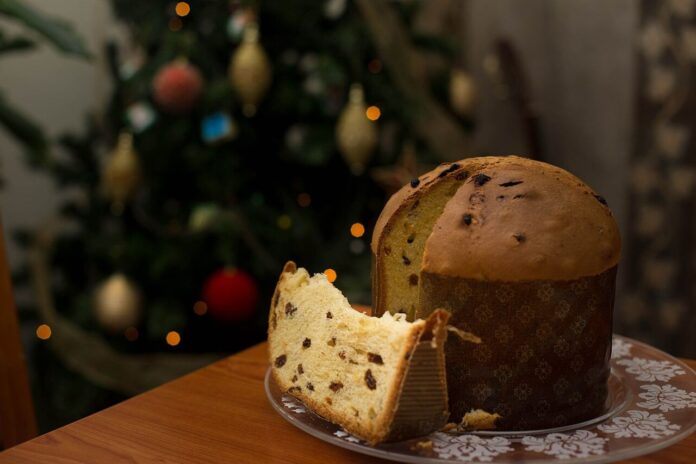
Of course, you can’t have holidays without a pan dulce or panettone, a tradition brought over from Italy. It can have dried and candied fruit, chocolate chips, and evendulce de leche filling.
You also can’t miss the turrón — another tradition brought from Spain — as well as the raisins and almonds dipped in chocolate, and the caramelized peanuts and almonds known as garrapiñada. Enjoy!
Cover photo: Panettone by Nicola/Wikipedia Creative Commons