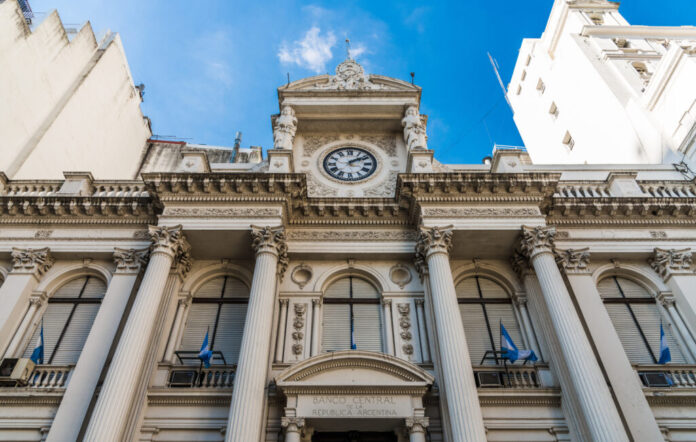
The delinquency rate for Argentine household loans with banks reached 7.8% in October, the highest value since the Central Bank began keeping such records in 2010. The figure represents a 5.5-year-on-year jump compared to 2024, when irregularity in loan repayments to families barely exceeded 2%.
The data was published in a Central Bank report released on Friday that follows the evolution of default levels on loans granted to the private sector.
Although October was marked by particularly high interest rates due to tensions surrounding the midterms, the number of families defaulting on loans has been consistently growing over the past 12 months. In June, for example, it was already at 5.2%.
The report also revealed that, for the second consecutive month, private banks registered losses. In September, the negative result was equivalent to 2% of their assets. Although that figure decreased in October, it remained significant, at close to 0.5%.
Roberto Feletti, former trade secretary under the Alberto Fernández administration, attributed the increase in defaulted loans to a slew of reasons, such as “real interest rates that won’t go down, wages that grow less than inflation, and jobs being destroyed.” In a post on X, he said that austerity measures are being “imposed on those at the bottom.”
“Credit grew, but on a fragile basis: lower real wages and less work,” he added. “The result: indebted households that can no longer pay.”
In a separate report, the Central Bank revealed that personal loans increased 25% in July (the latest available month) compared to January 2025. That surge skyrocketed to 144% when compared to the same month in the previous year. Credit card use also grew by 53% interannually.
Corporate loans’ delinquency rate was 1.9% in October, doubling the percentage of the same month in 2024.
The figures come on the heels of a Friday report that showed informal employment has also been rising. A brief released by the government statistics agency INDEC showed that unemployment had dropped in the third quarter of the year, falling from 6.9% to 6.6%. Out of 238,000 new jobs, however, 201,000 (a little over 84%) were in the informal sector.